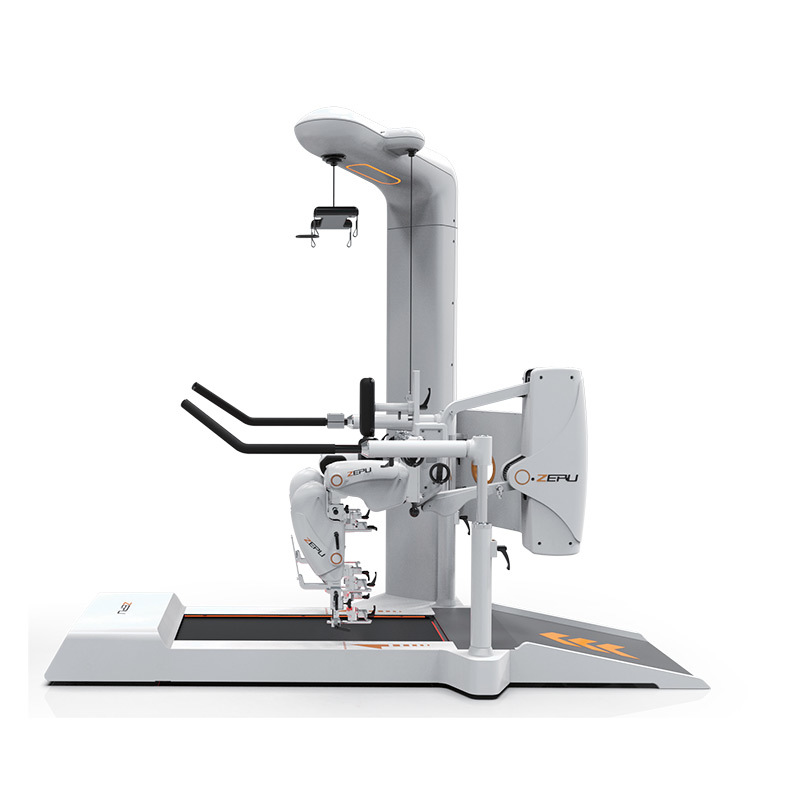
ZEPU-AI1 — Robotic Gait Training and Evaluation System
Created: Views: 11
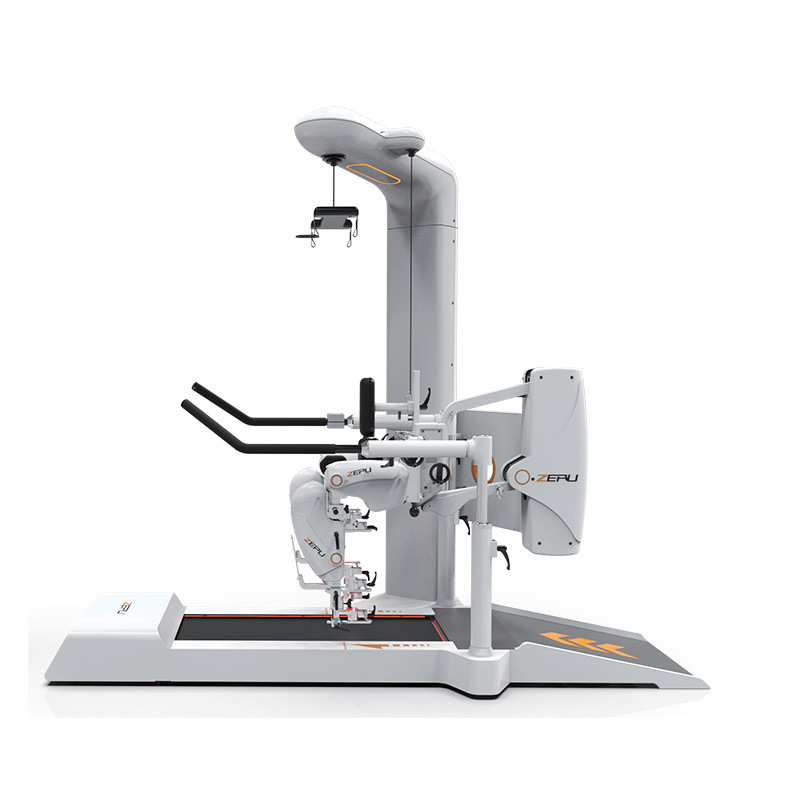
ZEPU-AI1 — Robotic Gait Training and Evaluation System
ZEPU-AI1 Gait Training and Evaluation System is a modern robotic rehabilitation device designed for patients with impaired walking ability. The system combines a robotic leg mechanism, a medical treadmill, a body weight support system, movement assessment software, and interactive virtual training functions.
With ZEPU-AI1, the patient performs walking exercises safely in an upright position. The device guides leg movements in a way that closely follows the physiological gait model, adapts the body load to the patient's condition, and records training results in digital form.
What is ZEPU-AI1 needed for?
After stroke, traumatic brain injury, spinal cord injury, Parkinson's disease, multiple sclerosis, or orthopedic problems, patients may develop impaired walking function. In such cases, before starting to walk independently, the patient must relearn leg movements, restore balance, and activate the muscles step by step.
ZEPU-AI1 was developed precisely for this process. The robotic system allows the patient to repeat stepping, develop correct walking movements, and take an active part in the rehabilitation process.
The device is based on the principle of neuroplasticity: repeated and correctly performed movements help reshape the gait-related motor programs in the brain and nervous system.
How does ZEPU-AI1 work?
ZEPU-AI1 controls the patient's legs through a mechanical robotic system. The device helps to repeatedly perform the main movements of human gait: forward leg swing, knee flexion, and the stance and swing phases.
The system combines three main components:
- robotic leg mechanism;
- treadmill;
- static and dynamic body weight support system.
The load on the patient's legs can be reduced. This makes it possible to start gait training more safely for patients in severe condition.
Five-axis robotic mechanism
One of the main technological advantages of ZEPU-AI1 is its five-axis movement mechanism.
This mechanism:
- coordinates hip and knee joint movement;
- senses the patient's individual movement;
- adapts mechanical assistance to the patient's condition;
- reproduces the physiological gait model;
- helps reduce the level of assistance as the patient's active participation increases.
Five-axis linkage technology is not limited to simple mechanical repetition of the patient's movement. The system is also designed to take into account the shift of the center of gravity during human walking.
Three gait training modes
ZEPU-AI1 offers three training modes depending on the patient's rehabilitation stage:
Passive mode
When the patient's muscle strength is insufficient or the patient cannot initiate movement independently, the robotic mechanism controls the leg movements.
Assistive mode
The patient participates in the movement, and the robot compensates for the missing strength. This mode is used to gradually increase the patient's active participation.
Active mode
The patient performs the walking movement independently. The robotic system provides guiding assistance when necessary and monitors that the movement is performed correctly.
The guiding force can be adjusted from 1% to 100%. Therefore, ZEPU-AI1 makes it possible to build an individual rehabilitation program suited to the patient's condition.
Body weight support
In the initial stage of gait training, it may be difficult for the patient's legs to bear full body weight. ZEPU-AI1 partially reduces body weight, helping the patient exercise in a safer position.
The system provides:
- static body weight support;
- dynamic body weight support;
- simulation of center-of-gravity shift;
- control of the patient's upright posture.
Dynamic support accounts for the natural transfer of body weight from one leg to the other during walking. This allows training that is closer to physiological gait than an ordinary suspension system.
Movement assessment and real-time monitoring
ZEPU-AI1 is not just a device that helps perform walking exercises. It is also a digital system for assessing the patient's movements and tracking rehabilitation results.
During training, the following parameters are monitored:
- walking speed;
- step length;
- hip joint angle;
- knee joint angle;
- range of motion;
- patient's active participation;
- guiding force;
- trunk deviations;
- muscle spasm;
- training duration;
- changes during the course of treatment.
This data allows the rehabilitation specialist to compare the patient's initial and subsequent results, adjust training parameters, and build an individual treatment plan.
AI Mirror Gait — mirror-based gait function
ZEPU-AI1 includes an AI mirror gait learning assessment function. It allows the patient's walking movements to be observed, analyzed, and displayed visually on the screen.
By seeing their own movements, the patient:
- better understands stepping;
- controls leg movements;
- adapts to the correct gait model;
- participates more actively in training.
Visual feedback helps increase the patient's motivation and makes rehabilitation exercises easier to understand.
Virtual rehabilitation training
ZEPU-AI1 uses interactive virtual scenes to engage the patient in training. The system offers 4 virtual training environments.
Virtual training:
- focuses the patient's attention on the exercise;
- makes long exercises more interesting;
- brings the walking process closer to real-life situations;
- increases the patient's active participation in training.
Muscle spasm detection
In neurological patients, muscle spasm may occur during walking. ZEPU-AI1 monitors spasm and, when necessary, helps stop the movement to ensure safety.
This function:
- increases patient safety;
- prevents incorrect movements from continuing;
- allows the rehabilitation specialist to assess the degree of spasm;
- helps adjust training parameters.
Who is ZEPU-AI1 recommended for?
ZEPU-AI1 may be used as part of a rehabilitation program in the following cases:
- gait disorders after stroke;
- traumatic brain injuries;
- Parkinson's disease;
- spinal cord injury;
- multiple sclerosis;
- paraplegia;
- cerebral palsy;
- weakness of the lower limb muscles;
- muscle atrophy;
- conditions after orthopedic surgery;
- impaired hip or knee joint function;
- muscle weakness after prolonged bed rest;
- restoring walking function in persons with disabilities and elderly patients.
Before using the device, the patient's clinical condition must be assessed by a physician and a rehabilitation specialist.
Main advantages of ZEPU-AI1
- 5-axis robotic gait mechanism;
- passive, assistive, and active training modes;
- individual body weight reduction;
- coordination of hip and knee joints;
- high repetition of walking movements;
- AI mirror gait function;
- real-time movement assessment;
- muscle spasm detection;
- virtual training scenes;
- 55-inch display;
- remote control;
- adjustment of the patient's individual parameters;
- analysis of rehabilitation results.
ZEPU-AI1 technical specifications
| Parameter | Value |
|---|---|
| Robotic mechanism | 5-axis |
| Hip joint range | 30–50° |
| Knee joint range | 50–80° |
| Thigh length adjustment | 35–47 cm |
| Shank length adjustment | 0–11 cm |
| Body weight support | up to 135 kg |
| Dynamic body weight reduction | 0–85 kg |
| Guiding force | 1–100% |
| Training time | 1–99 minutes |
| Patient height | up to 200 cm |
| Platform size | 2000 × 800 mm |
| Display | 55 inches |
| Power supply | 220 V, 50 Hz |
| Power | 950 VA |
| Spasm response | up to 500 ms |
Note: Some public catalogs of ZEPU-AI1 list different values for treadmill speed and body weight reduction range. For tenders, commercial offers, or official technical documents, the values from the manufacturer's latest passport must be used.
How does ZEPU-AI1 differ from an ordinary gait trainer?
An ordinary treadmill only gives the patient a moving platform to walk on. It does not fully control leg movements, joint angles, or muscle spasm.
ZEPU-AI1, at the same time:
- controls the legs through a robotic mechanism;
- reduces body weight;
- coordinates the hip and knee joints;
- trains stepping through repetition;
- measures gait parameters;
- detects spasm;
- records the patient's rehabilitation dynamics.
Therefore, ZEPU-AI1 is not an ordinary exercise machine but a professional rehabilitation complex that combines gait restoration, robotic assistance, and assessment of the patient's movements.
ZEPU-AI1 for rehabilitation centers
ZEPU-AI1 may be used in the following institutions:
- rehabilitation centers;
- neurology departments;
- orthopedic clinics;
- post-stroke recovery centers;
- physiotherapy clinics;
- pediatric rehabilitation centers;
- neurorehabilitation departments;
- sports and functional recovery centers;
- modern robotic rehabilitation clinics.
The device helps standardize the rehabilitation process, digitally track patient results, and improve specialist efficiency.
Conclusion
ZEPU-AI1 Gait Training and Evaluation System is a modern robotic rehabilitation system developed for patients with impaired walking ability.
The device combines a five-axis robotic mechanism, body weight support, passive-assistive-active training modes, real-time movement assessment, an AI mirror gait function, and muscle spasm control.
ZEPU-AI1 allows the patient to relearn walking movements, and allows the rehabilitation specialist to monitor the treatment process precisely and manage it individually.
ZEPU-AI1 is a professional robotic rehabilitation solution for restoring walking function after stroke, neurological diseases, spinal cord injury, and orthopedic problems.
Short product description:
ZEPU-AI1 is a professional gait training system designed to restore patients' walking function, provide robotic support for leg movements, and assess rehabilitation results.