# VR and Nerve Stimulation Mark a New Era in Stroke Rehabilitation: How Does the MultiSensy Technology Work?
Created: Views: 0
# VR and Nerve Stimulation Mark a New Era in Stroke Rehabilitation: How Does the MultiSensy Technology Work?
**Meta Title:** VR and Nerve Stimulation for Stroke Rehabilitation | MultiSensy Technology
**Meta Description:** The MultiSensy platform combines Virtual Reality (VR) with electrical nerve stimulation, offering new possibilities for restoring hand and upper limb function after stroke.
---
# A New Era of Stroke Rehabilitation Technologies
Stroke remains one of the leading causes of long-term disability worldwide. Many stroke survivors experience reduced hand and arm movement, decreased grip strength, and impaired sensation.
Although conventional physiotherapy and occupational therapy remain effective, researchers continue to develop more advanced rehabilitation solutions.
One of the most promising innovations is **MultiSensy**, a next-generation rehabilitation platform that combines **Virtual Reality (VR)** with **Transcutaneous Electrical Nerve Stimulation (TENS)** into a single neurorehabilitation system.
---
# What Is MultiSensy?
MultiSensy is an innovative rehabilitation platform designed to improve upper limb function after stroke.
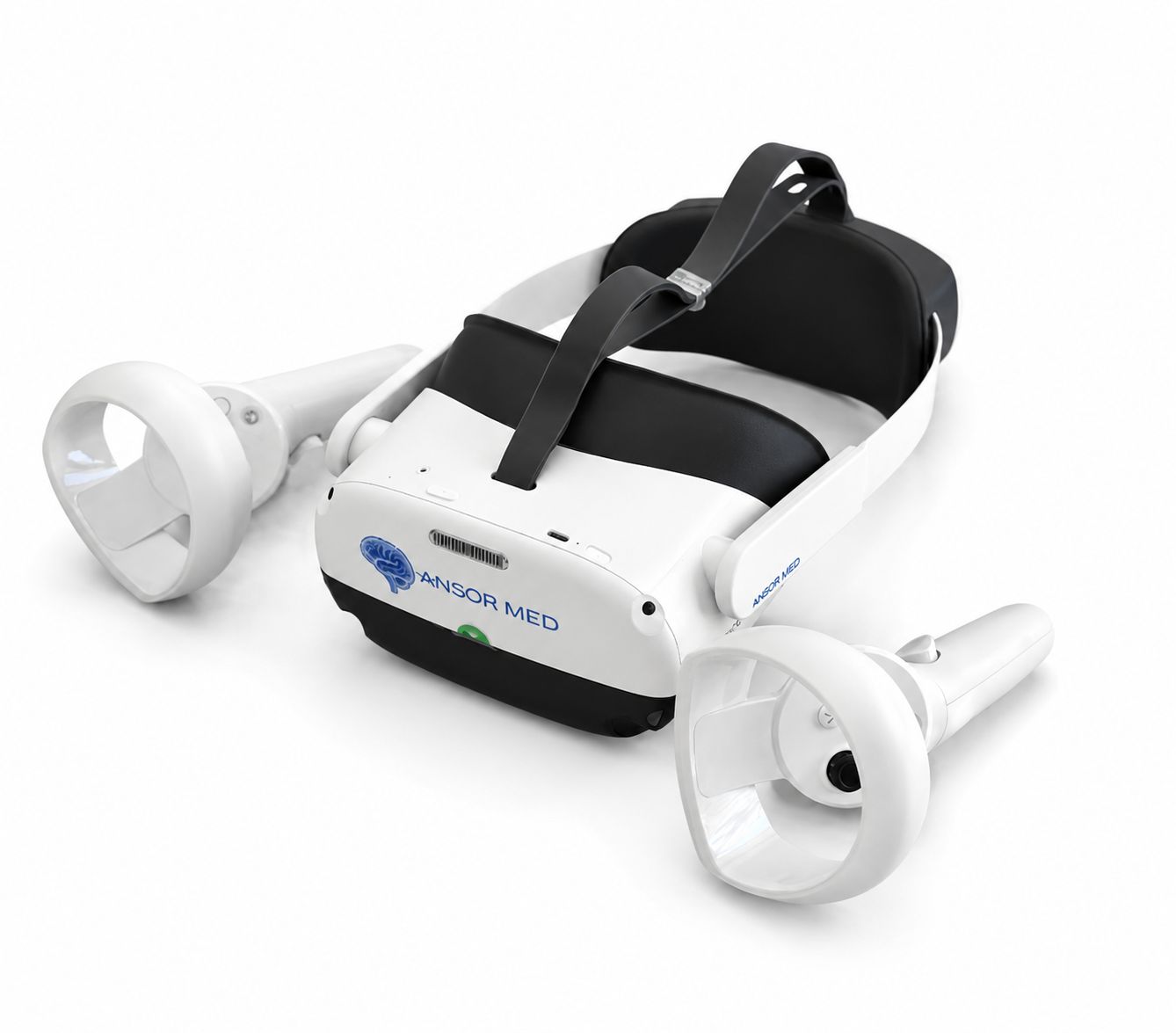
During therapy, patients wear a VR headset and perform exercises in an immersive virtual environment that simulates everyday activities.
Typical exercises include:
* grasping objects;
* lifting blocks;
* pressing buttons;
* wrist rotation;
* manipulating small items.
At the same time, electrodes placed on the skin deliver gentle electrical stimulation to peripheral nerves. This provides additional sensory feedback, allowing patients to experience a more natural interaction with virtual objects.
The combination of VR and sensory stimulation helps strengthen communication between the brain, muscles, and sensory pathways.
---
# What Did the Study Show?
The technology was evaluated in **34 patients** living with chronic stroke.
During the clinical study:
* the MultiSensy group completed 12 therapy sessions over three weeks;
* the control group received conventional physiotherapy and occupational therapy.
The preliminary findings demonstrated:
* greater improvement in hand and arm function;
* better performance in daily activities;
* improved sensory perception;
* enhanced awareness of the affected limb.
Researchers describe these results as promising, while emphasizing that the technology is still under clinical investigation and requires larger studies before widespread clinical adoption.
---
# Why Can VR Be More Effective Than Conventional Therapy?
Virtual Reality creates an engaging and motivating rehabilitation environment.
Its interactive nature can:
* increase patient motivation;
* make therapy sessions more enjoyable;
* encourage more movement repetitions;
* provide therapists with detailed digital performance data.
The system also records every training session, allowing rehabilitation progress to be monitored objectively.
---
# Why Is Nerve Stimulation Important?
Stroke affects not only movement but also sensation.
Many patients:
* have difficulty feeling their affected hand;
* struggle to recognize objects by touch;
* experience impaired body awareness.
Electrical nerve stimulation provides additional sensory input that may help rebuild communication between the brain and the affected limb.
---
# Could Home-Based Rehabilitation Become Reality?
Researchers believe similar rehabilitation systems may eventually be adapted for home use.
By combining VR, artificial intelligence, and remote monitoring, healthcare professionals could supervise rehabilitation sessions, adjust therapy programs, and monitor patient progress from a distance.
This approach has the potential to make rehabilitation more accessible, personalized, and efficient.
---
# ANSOR MED Perspective
Rehabilitation technologies continue to evolve rapidly. Robotic systems, Virtual Reality, electrical nerve stimulation, and artificial intelligence are expected to play an increasingly important role in improving recovery after stroke.
ANSOR MED continuously follows the latest developments in global rehabilitation technology and is committed to bringing innovative medical solutions to healthcare providers across Uzbekistan.
---
## Frequently Asked Questions (FAQ)
### What is VR rehabilitation?
VR rehabilitation is a modern therapeutic approach where patients perform rehabilitation exercises in an immersive virtual environment.
### Is electrical nerve stimulation safe?
When performed under professional supervision, electrical nerve stimulation is considered safe and is widely used in rehabilitation medicine.
### Is MultiSensy commercially available?
Not yet. The technology is currently undergoing clinical research and requires further validation before becoming widely available.
### Can this technology cure stroke?
No. It does not cure stroke. Instead, it is designed to support the recovery of motor and sensory function during rehabilitation.