The Future of Stroke Rehabilitation: Artificial Intelligence, Robotics and Smart Medical Technologies
Created: Views: 9
Author: ANSOR MED Editorial Team
Stroke remains one of the leading causes of long-term disability worldwide. Although modern medicine has significantly improved survival rates, millions of stroke survivors continue to experience impaired mobility, reduced independence and decreased quality of life. Effective rehabilitation is therefore essential for restoring function and improving patient outcomes.
A recent scientific review published in Brain Sciences (2026), titled "Stroke Rehabilitation, Novel Technology and the Internet of Medical Things", highlights how emerging digital technologies are transforming neurorehabilitation. According to the authors, the future of rehabilitation lies not in isolated medical devices but in intelligent, interconnected healthcare ecosystems.
What is the Internet of Medical Things (IoMT)?
The Internet of Medical Things (IoMT) is a network of connected medical devices, software platforms and healthcare systems that continuously collect, exchange and analyze patient data.
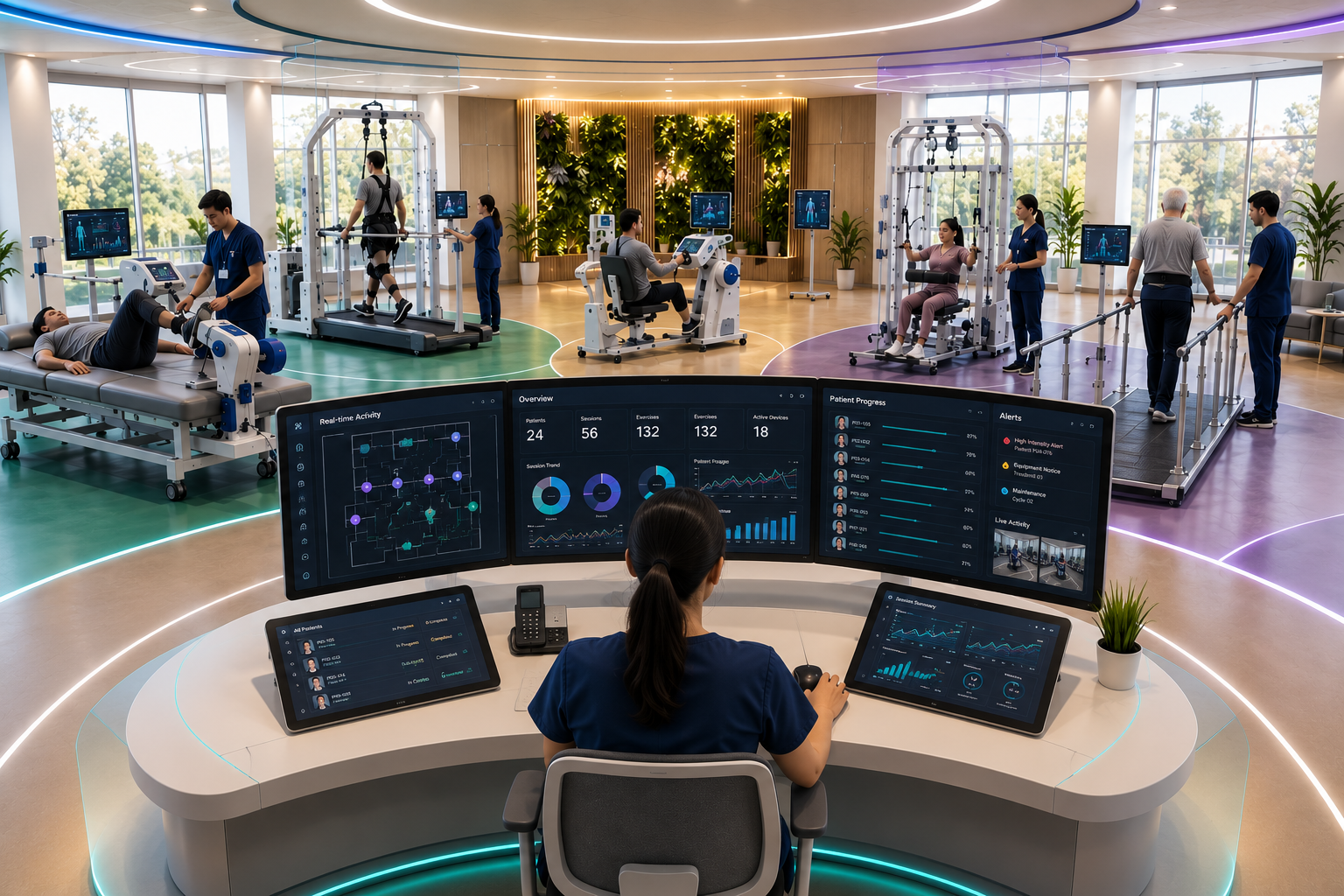
Within an IoMT-enabled rehabilitation center, technologies such as robotic rehabilitation systems, virtual reality, wearable sensors, brain-computer interfaces and electronic medical records work together to provide personalized, data-driven rehabilitation.
Key Technologies Shaping the Future of Rehabilitation
Artificial Intelligence
Artificial intelligence can analyze patient performance, evaluate rehabilitation progress and automatically adjust therapy programs according to each patient's individual needs.
Robotic Rehabilitation
Robotic gait trainers and upper-limb rehabilitation devices enable intensive, repetitive and highly precise training, supporting neuroplasticity and functional recovery.
Virtual Reality
Virtual Reality creates immersive rehabilitation environments that improve patient motivation, increase therapy engagement and provide real-time feedback during exercises.
Brain-Computer Interfaces (BCI)
BCI technology enables communication between the brain and external rehabilitation devices by interpreting neural signals. Although still under active research, it represents one of the most promising directions in neurorehabilitation.
Telerehabilitation
Remote rehabilitation allows therapists to monitor patient progress outside the hospital through digital platforms, making rehabilitation more accessible, especially for patients living in remote areas.
Wearable Technologies
Smart wearable devices continuously monitor movement quality, muscle activity, heart rate and physical performance, providing clinicians with objective rehabilitation data.
What Will Future Rehabilitation Centers Look Like?
According to the review, next-generation rehabilitation centers will feature:
Fully connected medical devices
AI-assisted clinical decision support
Real-time patient monitoring
Integration of hospital and home-based rehabilitation
Personalized treatment based on continuous data analysis
Such systems are expected to improve treatment efficiency while delivering more individualized patient care.
ANSOR MED Perspective
At ANSOR MED, we believe that the future of rehabilitation is built on the integration of advanced medical technologies rather than the use of standalone equipment.
Our vision is to support the development of Smart Rehabilitation Centers by combining robotic rehabilitation, balance and gait training systems, functional electrical stimulation (FES), virtual reality, wearable technologies and intelligent digital platforms into one comprehensive rehabilitation ecosystem.
Beyond supplying modern rehabilitation equipment, ANSOR MED is committed to introducing international best practices and innovative technologies that contribute to the advancement of rehabilitation medicine in Uzbekistan and Central Asia.
Conclusion
Stroke rehabilitation is entering a new era driven by artificial intelligence, robotics, wearable technologies, virtual reality and the Internet of Medical Things. These innovations are expected to make rehabilitation more personalized, accessible and effective, ultimately improving patient recovery and quality of life.
Reference: Ana Costa et al. Stroke Rehabilitation, Novel Technology and the Internet of Medical Things. Brain Sciences, 2026.